Gender and Asian Modernities 19th & 20th Centuries
2-day display in Jameel Study Centre, 24th-25th June, 2024
Nineteenth and twentieth-century popular art can help us understand how Asian societies responded to changing conceptions of gender as they encountered modernity. This process was a complex one, in which western gender norms were often blended with pre-existing local ideas – which were themselves already amalgams of beliefs and practices drawn from different periods and cultures. This selection of prints from the Ashmolean’s rich collection illustrates some of these developments in three very different Asian societies – Japan, India and China.
Gender and Asian Modernities 19th & 20th Centuries
2-day display in Jameel Study Centre, 24th-25th June, 2024
JAPAN
Senzaburō Ibaya (c. 1820s - c. 1870s), publisher
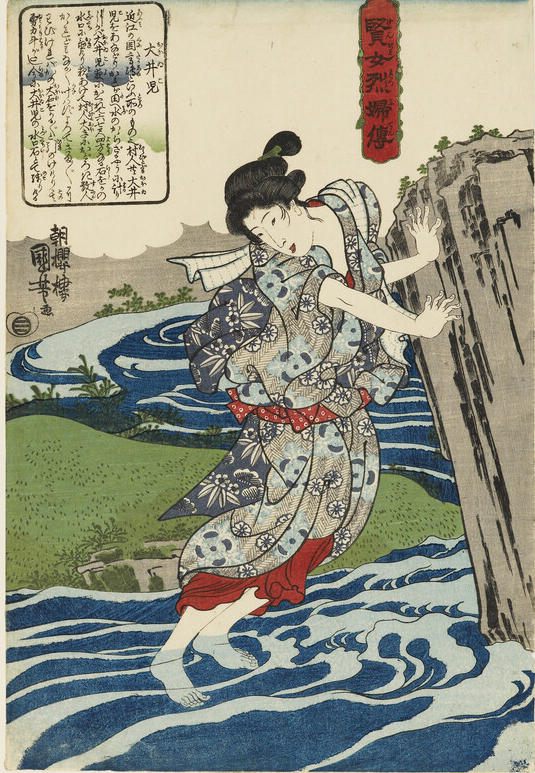
Ōiko Moves a Large Rock
place of creation: Tōkyō place of publication: Tōkyō
circa 1832
Presented by Christ Church College, University of Oxford, 1983.
woodblock print, with bokashi (tonal gradation), Material: paper, Technique: colour woodcut
Conservation 371 x 251 mm Conservation Mount 559 x 406 mm
h x w 36.8 x 25.1 cm
Utagawa Kuniyoshi (1797 - 1861), designer
Senzaburō Ibaya (c. 1820s - c. 1870s), publisher
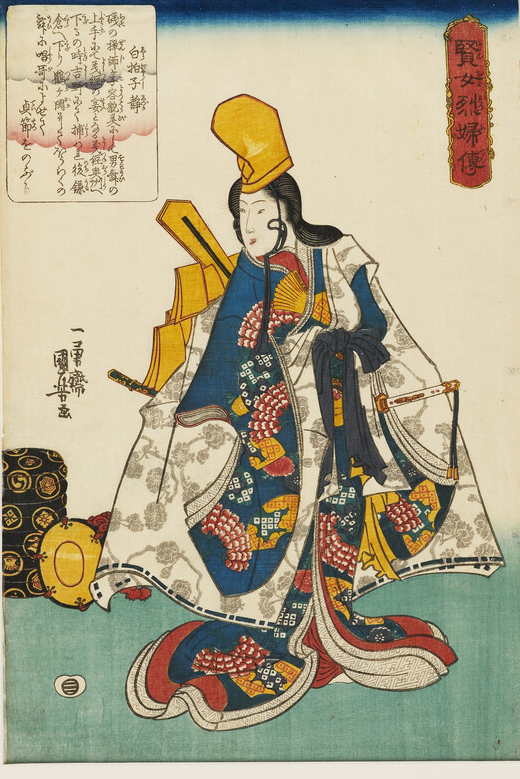
Shirabyōshi Shizuka
place of creation: Tōkyō place of publication: Tōkyō
circa 1832
Presented by Christ Church College, University of Oxford, 1983.
woodblock print, with bokashi (tonal gradation), Material: paper, Technique: colour woodcut
h x w x d: frame 59.6 x 44.5 x 1.7 cm
h x w: print 35.5 x 24.3 cm
Utagawa Kuniyoshi (1797 - 1861), designer
Senzaburō Ibaya (c. 1820s - c. 1870s), publisher
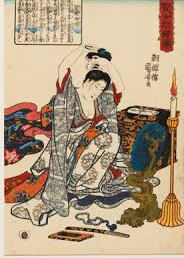
The loyal wife Kesa Gozen cutting her hair
place of creation: Tōkyō place of publication: Tōkyō
circa 1841
Presented by Christ Church College, University of Oxford, 1983.
woodblock print, with bokashi (tonal gradation), Material: paper, Technique: colour woodcut
h x w x d: frame 59.6 x 44.5 x 1.7 cm
h x w: print 35 x 25 cm
Tsuruya Kōkei (born 1946), designer Tokizō Nakamura, V (born 1955), subject Nakamura Tokizō V as the kept mistress Otomi place of creation: Japan 1990 Presented by Philip Harris, 2011.
Utagawa Kunisada (1823 - 1880), designer
Kumesaburō Iwai (1829 - 1882), subject Iwazō Kazusaya (1843 - 1853), publisher Fusajirō Kinugasa (c. 1843 - 1853), censor
Heiemon Murata (1843 - 1853), censor
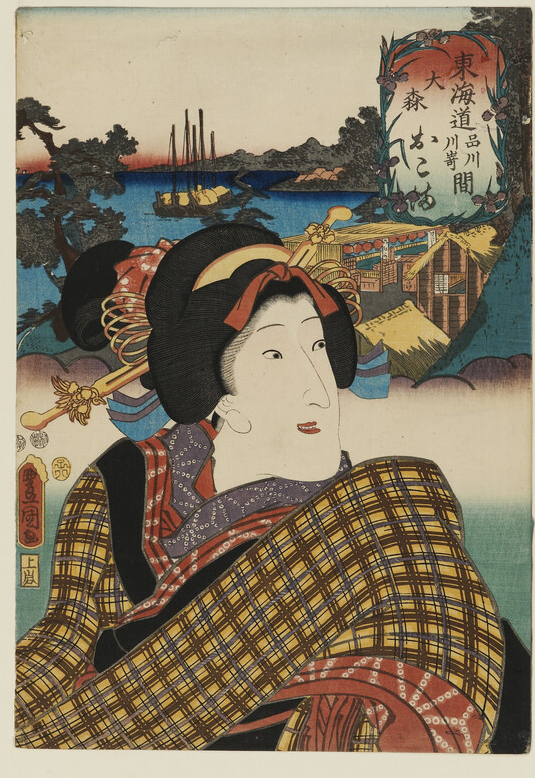
The character Okoma at Ōmori, between Shinagawa and Kawasaki
subject: Japan
place of publication: Tōkyō place of creation: Tōkyō
1852
Presented by Christ Church College, University of Oxford, 1983.
woodblock print, with bokashi (tonal gradation), Material: paper, Technique: colour woodcut
h x w 39.5 x 27 cm
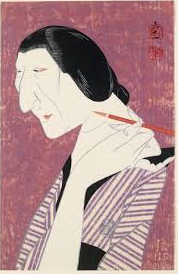
These three woodblock prints (EA. 1983.83, 90, 91) created by Kuniyoshi Utagawa, appear in his Lives of Wise Women and Faithful Wives published in the 1830 and 1840s. Collections of this kind, derived from Confucian didactic texts, were intended to teach women notions of ideal womanhood and were popular in many parts of East Asia. The earliest example of such texts, Biographies of Virtuous Women, was written in China in c. 78 BCE. ‘Sage intelligence’ and ‘skill in argument’ were prized accomplishments, as well as ‘maternal rectitude’, ‘purity and deference’. In later eras greater stress was placed on chastity, fidelity and self-sacrifice which, along with ‘filial piety, were seen as essential to the stability of society and the state. Kuniyoshi Utagawa’s wood-block prints, however, while partly inspired by Confucian models of female self- sacrifice, were unusual for the time in also focusing on women’s strength, ingenuity and intelligence. These two woodblock prints (EA1983.48, EA 2011.19) are portraits of popular Japanese onnagata ormale actors who play female roles in Japanese kabuki theatre (onnagata literally means ‘woman’s manner’). Originally women did perform on public morality. Until the late nineteenth century, therefore, men usually played women’s roles in kabuki. At first these actors adopted an androgynous style (futanarihira), modelling themselves on wakashu, or male adolescents, who had temporary relationships with older samurai (warriors) as part of their training in samurai masculinity. During the eighteenth century, however, they began to imitate real women, both on and off stage, and women in turn began to imitate them – creating a mutually constructed ideal of ‘femininity’. It was only in the later nineteenth century that the idea of an ‘artistic’ or ‘artificial’ femininity became sharply distinguished from that of ‘natural’ femininity inherent in biological women.
INDIA
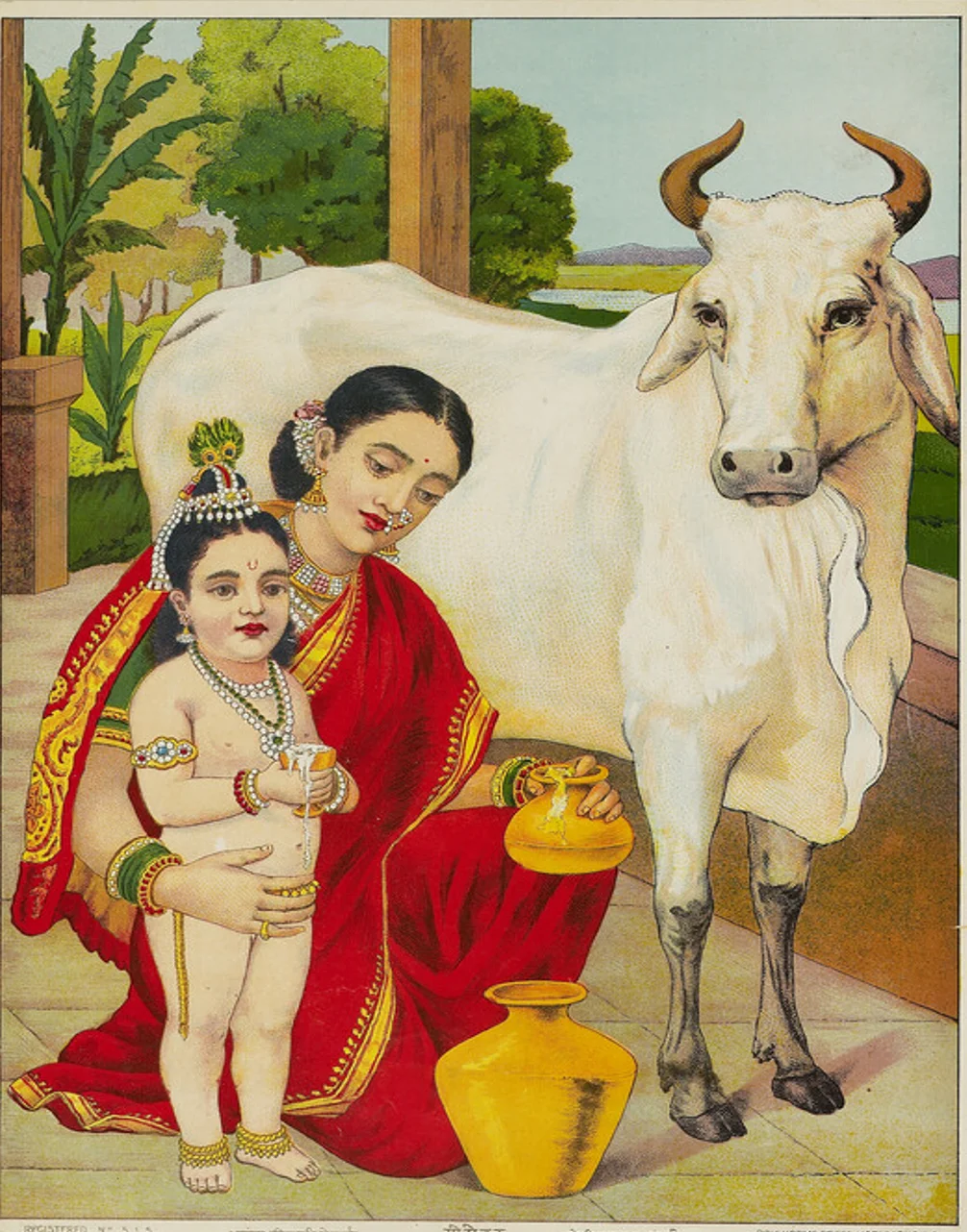
Go-dohana milking the cow
place of creation: Mumbai late 19th - early 20th century (1871 - 1930)
Presented by the Church Missionary Society, 1966
EA1966.52.110
Ravi Varma, Raja (1848 - 1906), artist, after
Ravi Varma Press, printmaker
chromolithograph, Material: paper,
Technique: lithograph
h x w 36 x 25 cm
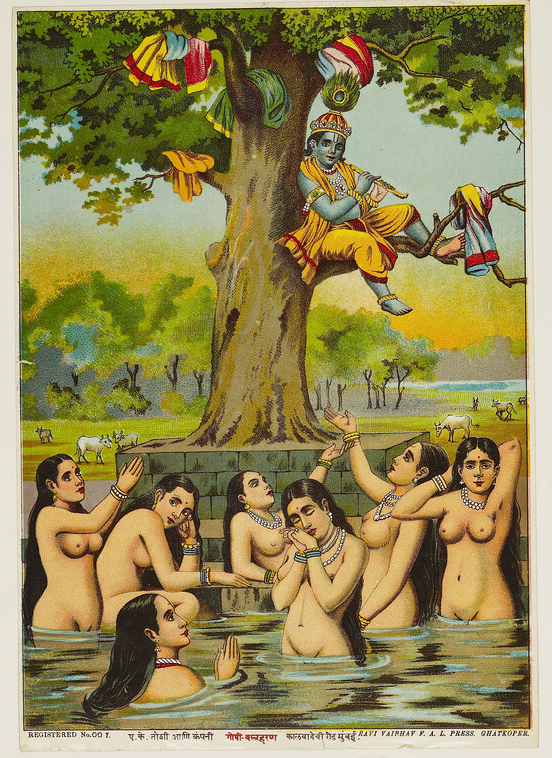
Krishna stealing the gopis' clothes
place of creation: Mumbai late 19th - early 20th century (1871 - 1930)
Presented by the Church Missionary Society, 1966.
Ravi Varma, Raja (1848 - 1906), artist, after
Ravi Vaibhav Press, printmaker
chromolithograph, Material: paper,
T echnique: lithograph
h x w 35.5 x 25 cm
Ravi Varma, Raja (1848 - 1906), artist, after
Ravi Varma Press, printmaker
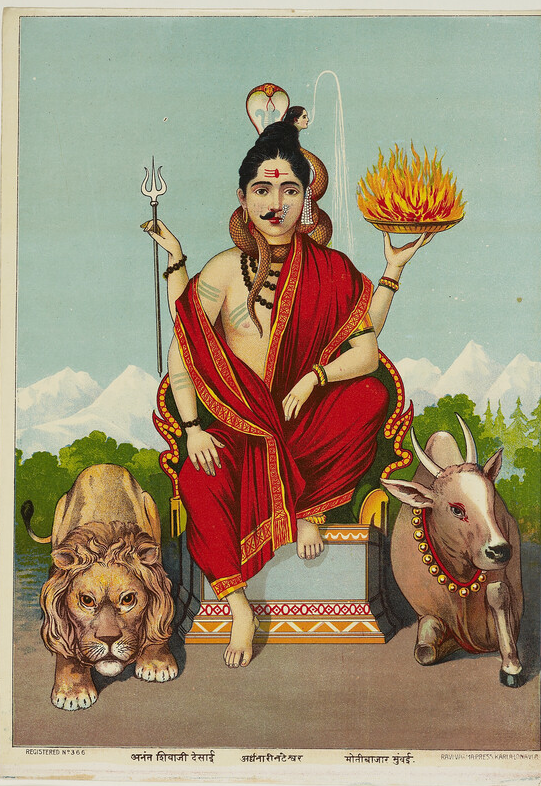
Ardhanari-Nateshvara, the androgynous composite of Shiva and Parvati
place of creation: Mumbai late 19th - early 20th century (1871 - 1930)
Presented by the Church Missionary Society, 1966.
chromolithograph, Material: paper,
Technique: lithograph
h x w 36 x 25 cm
Chitrashala Press, printmaker
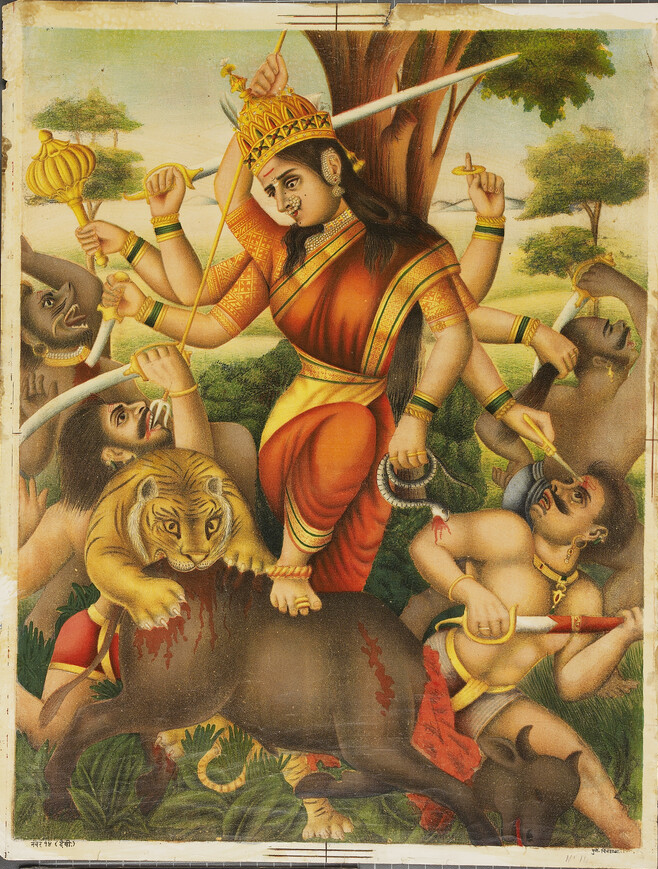
The goddess Devi slaughtering her enemies
place of creation: Pune late 19th century (1871 - 1900)
Presented by the Church Missionary Society, 1966.
chromolithograph, Material: paper,
T echnique: lithograph
h x w 51 x 39 cm
Chitrashala Press, printmaker
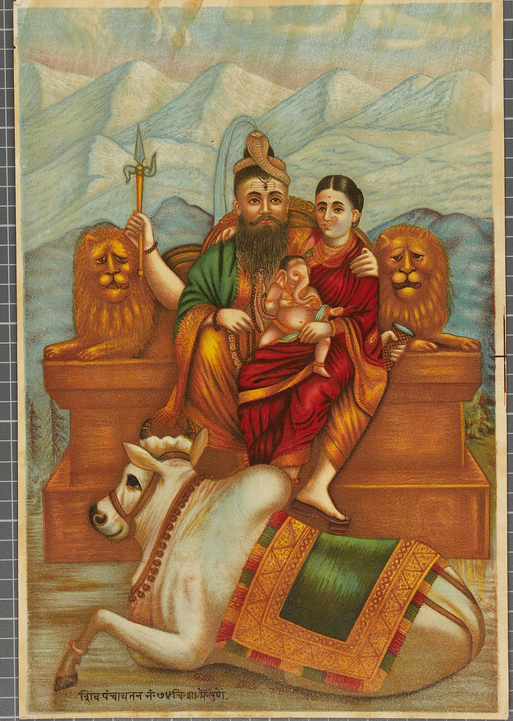
Shiva, Parvati, the infant Ganesha, and Nandin on Mount Kailash
place of creation: Pune late 19th century (1871 - 1900)
Presented by the Church Missionary Society, 1966.
chromolithograph, Material: paper,
T echnique: lithograph
h x w 36.5 x 25 cm
Lithographs of Indian religious themes and myths became immensely popular at the end of 19th and the early 20th centuries. Their creators, artists such as Ravi Varma, were trained in western art techniques and sensitive to the realism of photography; they were also responding to the intensification of opposition to British rule. Some of these, such as the image of ardhanarishvara (the lord who is half-man, half-woman), are striking visual modernisations of Hindu images believed to symbolize eternal law or truth (sanatana dharma). Others often combined western ideas of ‘modern’ femininity with Indian myth and aspects of tradition. Indian gods, for instance, are often represented as members of western-style middle-class nuclear families (see for example Shiva, Parvati and the infant Ganesha (EA 1966.52.36). The story of of Krishna stealing the milk maids’ clothes (EA 1966.52.36), reflects the growing influence in India of the male voyeurism common in western art since the Renaissance. The cow, sacred in Hinduism, is presented here (EA1966.52.110), as the motherly provider of nutritious milk, and among other things, reflected a eugenic interest in producing ‘better’ babies for the nation. Yet, paradoxically, ancient warrior goddesses were also very popular, now transformed into violent avengers of national and masculine honour. This six-armed goddess Devi (EA1966.52.17), for example, is shown apparently slaughtering her traditional foe, the buffalo demon. The British, however, worried about some of these Devi images, believing that they showed carefully coded yet dangerous manifestations of anti-Muslim and anti-British Hindu nationalism.
CHINA
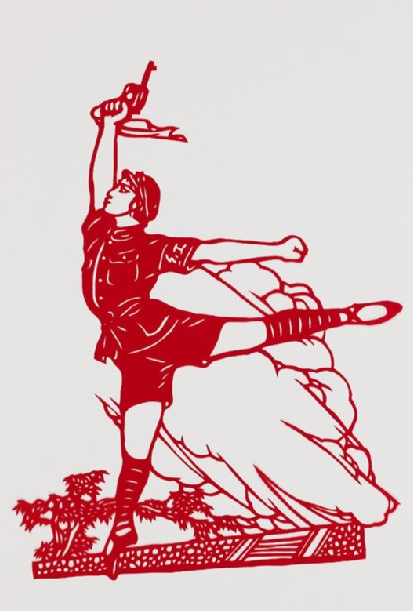
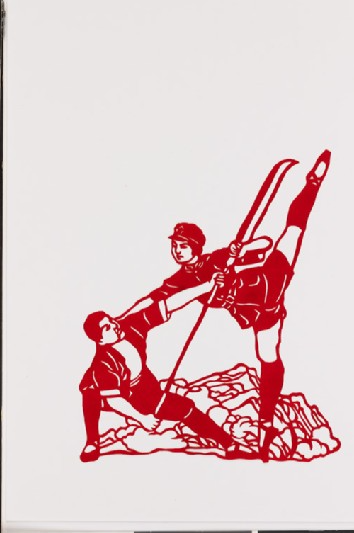
Heroine from the ballet Red Detachment of Women
Chinese Folk Papercuts
place of creation: Yangzhou, 1970s
Presented by John Gittings, 2008
The ballet Red Detachment of Women was one of the eight revolutionary model plays designated by Jiang Qing during the Cultural Revolution. The story depicts the liberation of a peasant girl named Wu Qinghua, who joined the Red Army on Hainan Island, and her rise under the influence of an army representative of the Communist Party Hong Changqing, The ballet was adapted from a novel based on a true story from the 1930s, and later adapted into film and opera. The ballet was highly praised by Premier Zhou Enlai, and performed for the U.S. President Richard Nixon on his visit to China in 1972. Despite its political overtones, the ballet remains part of the standard repertoire and a favourite amongst music and ballet lovers in China.
Two figures mid pas de deux, from the ballet Red Detachment of Women
Chinese Folk Papercuts
place of creation: Yangzhou, 1970s
Presented by John Gittings, 2008
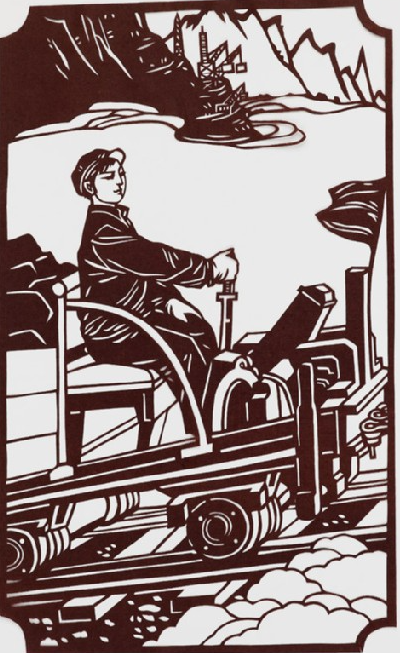
Woman driving a mining truck
place of creation: China 1973 - 1974
Presented by John Gittings, 2008.
cut paper, h x w 23.5 x 14.5 cm
New Women: Chinese Folk Papercuts, 1973 - 1974
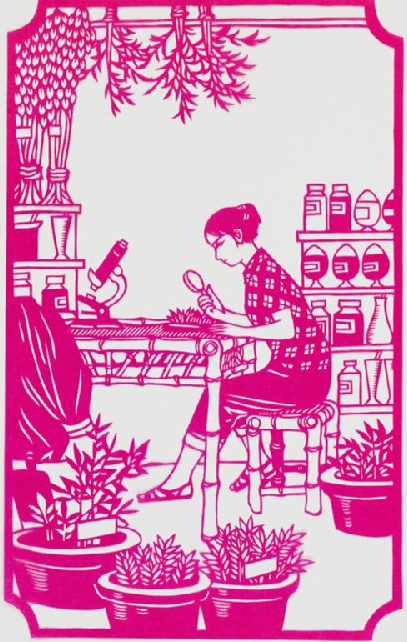
Barefoot doctor working at a bamboo table
place of creation: China 1973 - 1974
Presented by John Gittings, 2008.
cut paper, 23.5 x 14.5 cm (height x width)
New Women: Chinese Folk Papercuts, 1973 - 1974
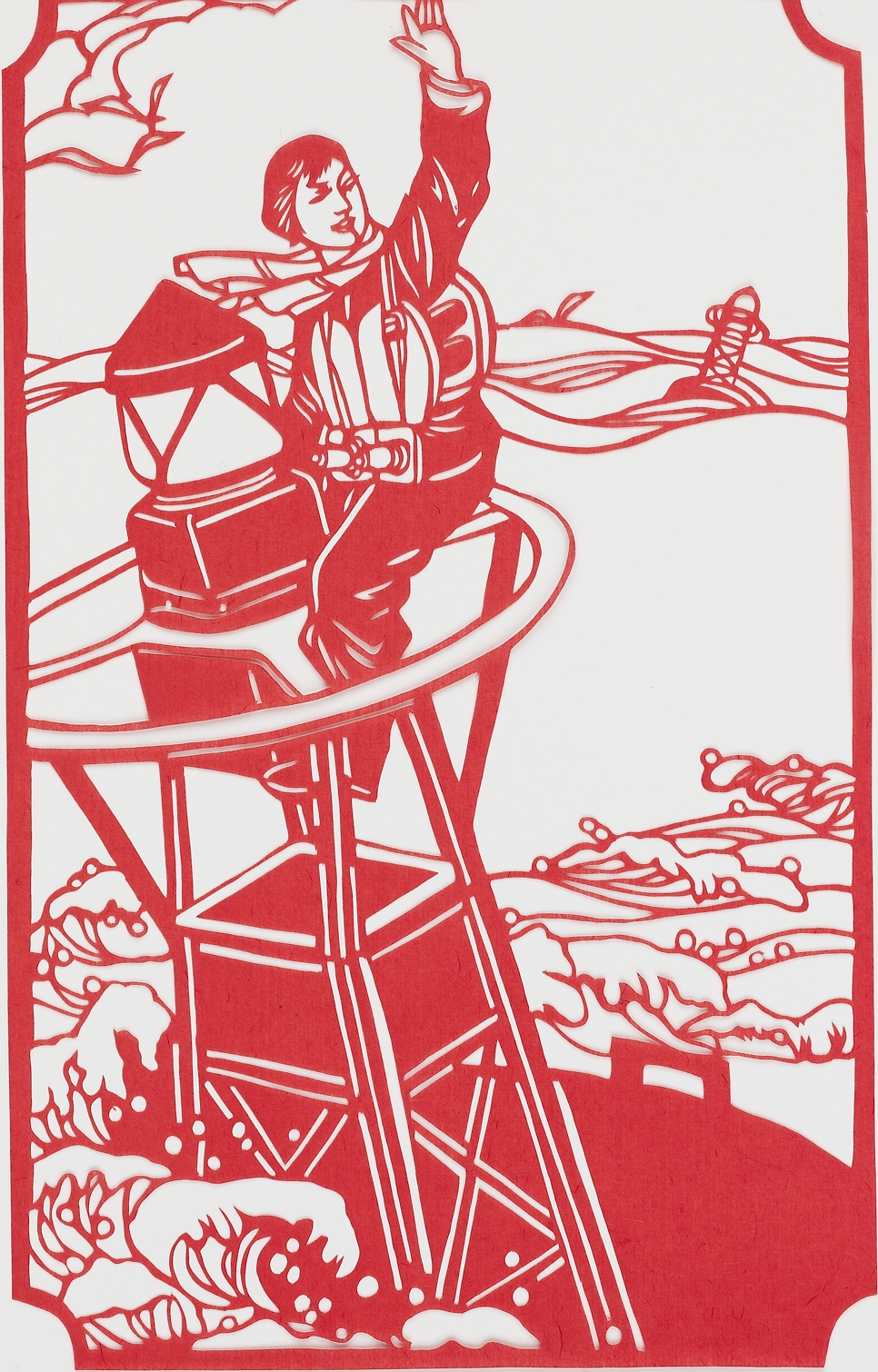
Woman on top of a lighthouse in a storm
place of creation: China 1973 - 1974
Presented by John Gittings, 2008.
cut paper, 23.5 x 14.5 cm (height x width)
New Women: Chinese Folk Papercuts, 1973 - 1974
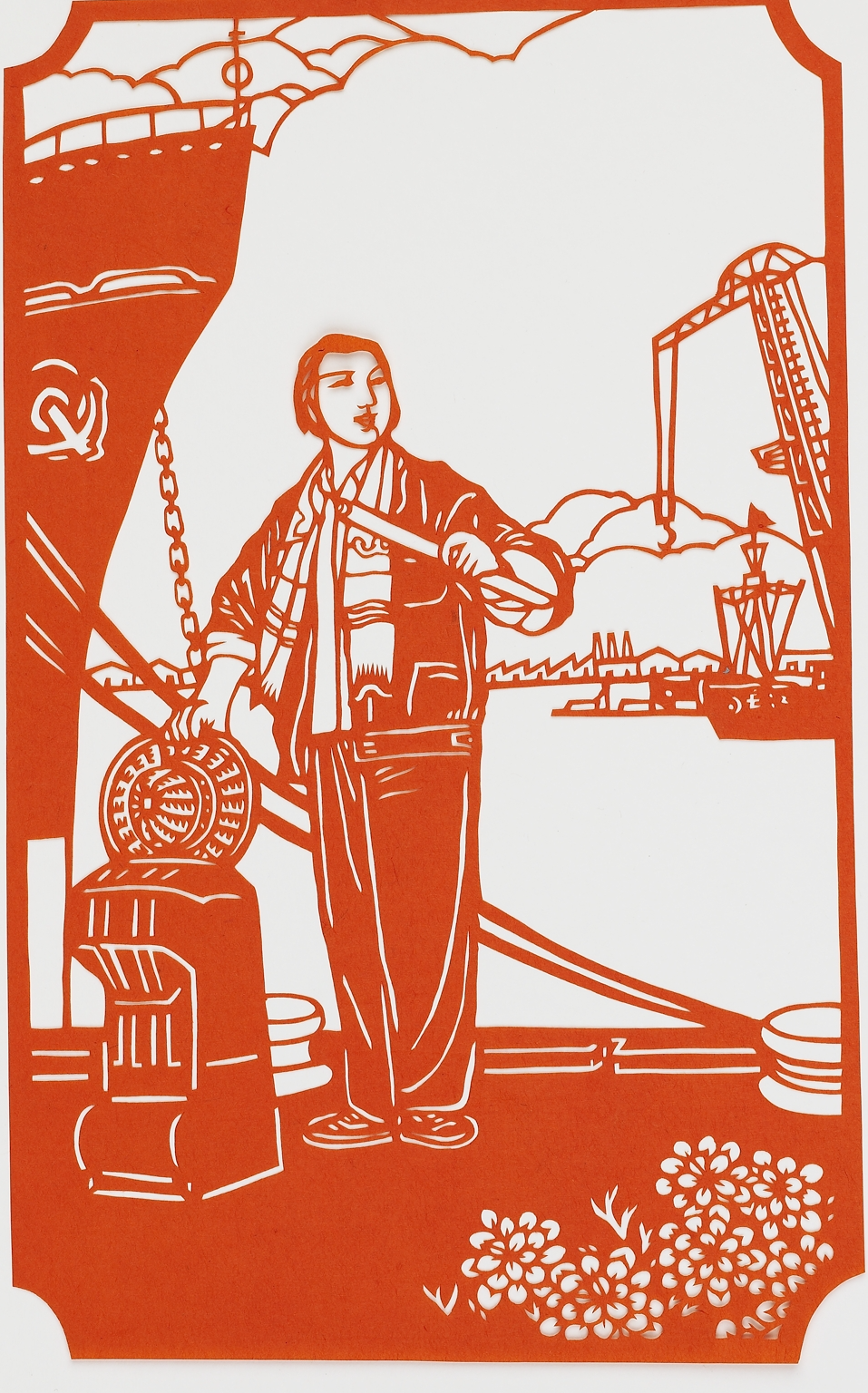
Woman on the dock at a shipyard
place of creation: China 1973 - 1974
Presented by John Gittings, 2008.
cut paper, 23.5 x 14.5 cm (height x width)
New Women: Chinese Folk Papercuts, 1973 - 1974
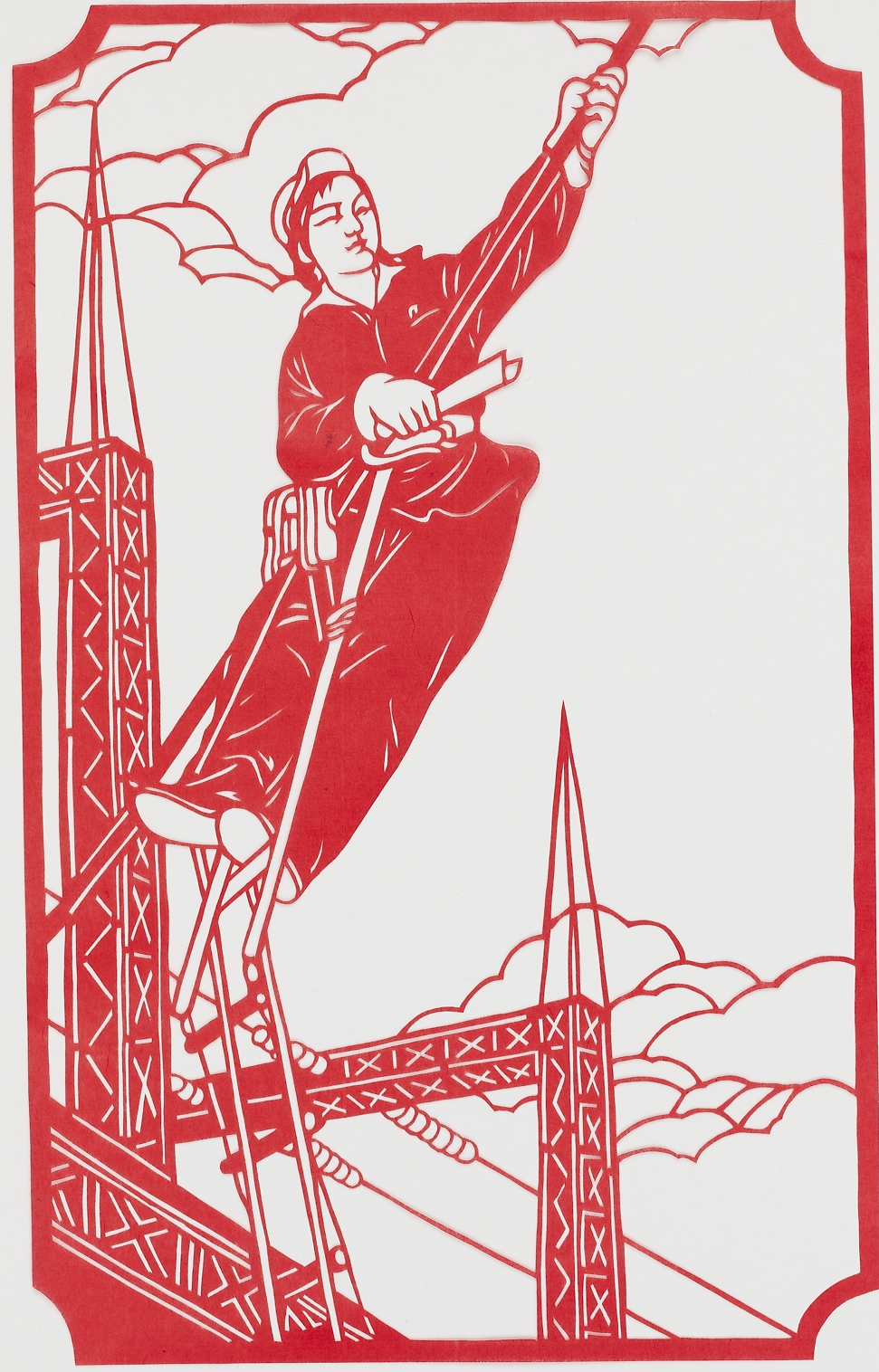
Woman on a suspension bridge cable
place of creation: China 1973 - 1974
Presented by John Gittings, 2008.
cut paper, 23.5 x 14.5 cm (height x width)
New Women: Chinese Folk Papercuts, 1973 - 1974
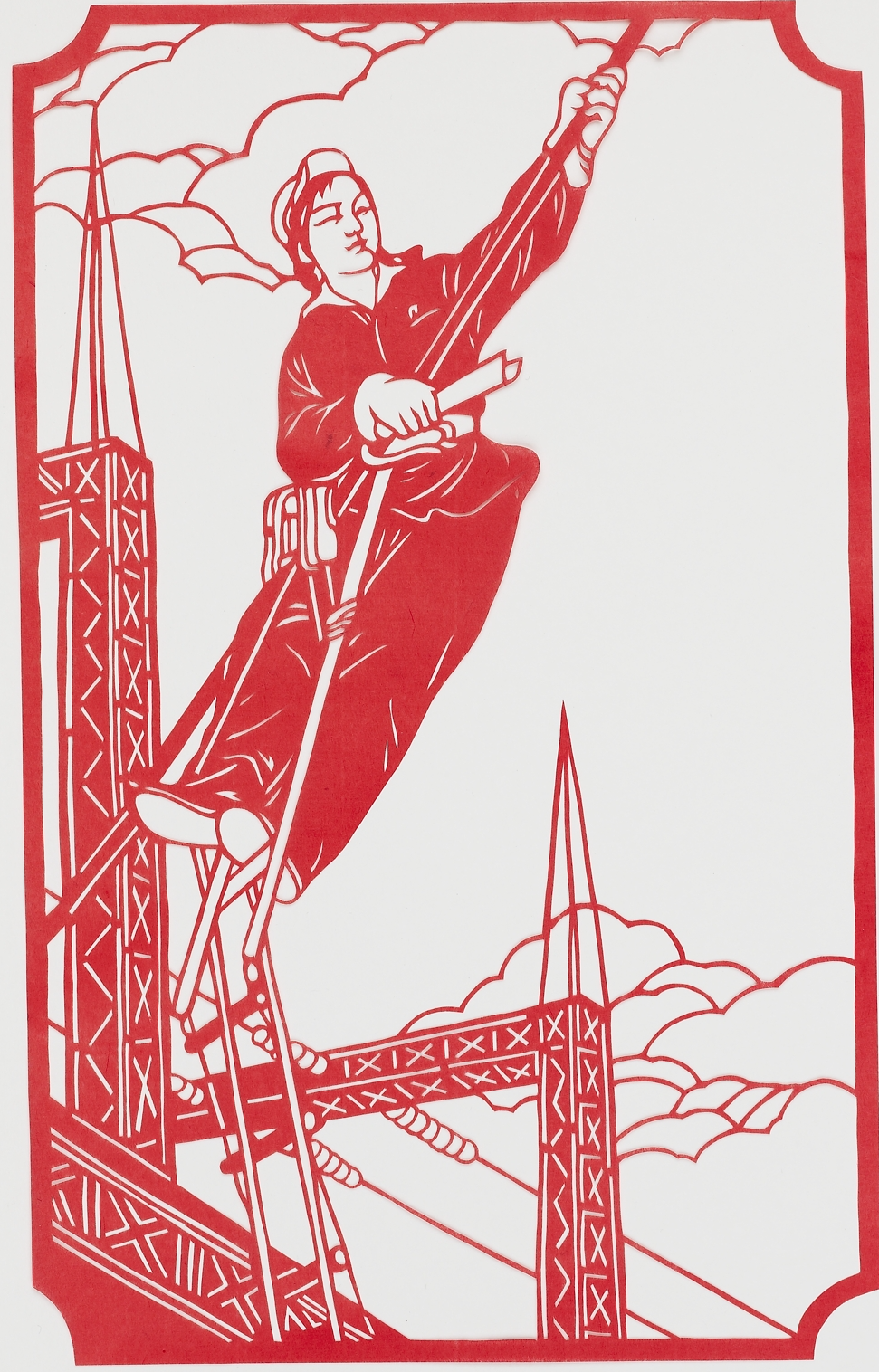
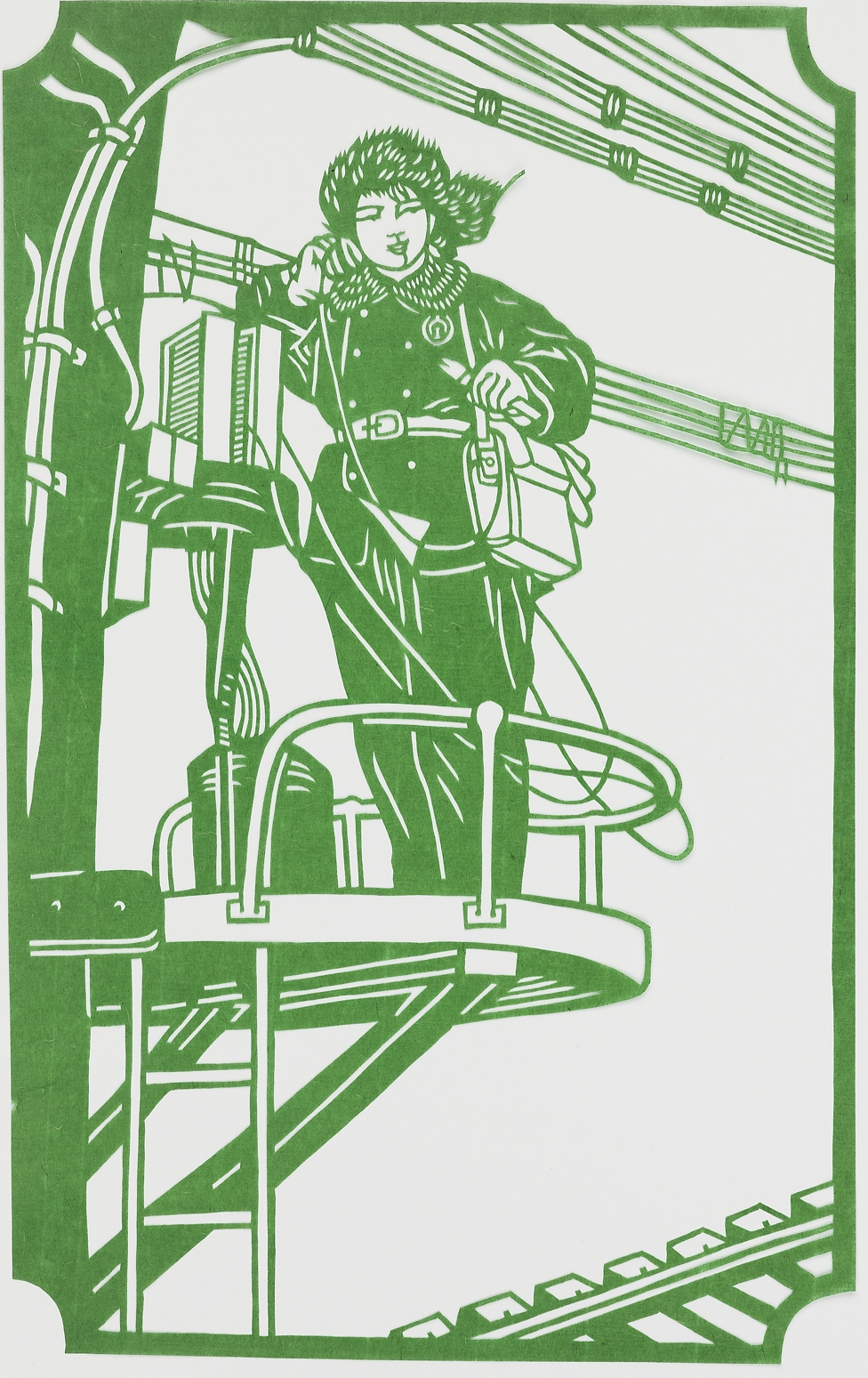
Woman up a pylon by a railway track
place of creation: China 1973 - 1974
Presented by John Gittings, 2008.
cut paper, 23.5 x 14.5 cm (height x width)
New Women: Chinese Folk Papercuts, 1973 - 1974
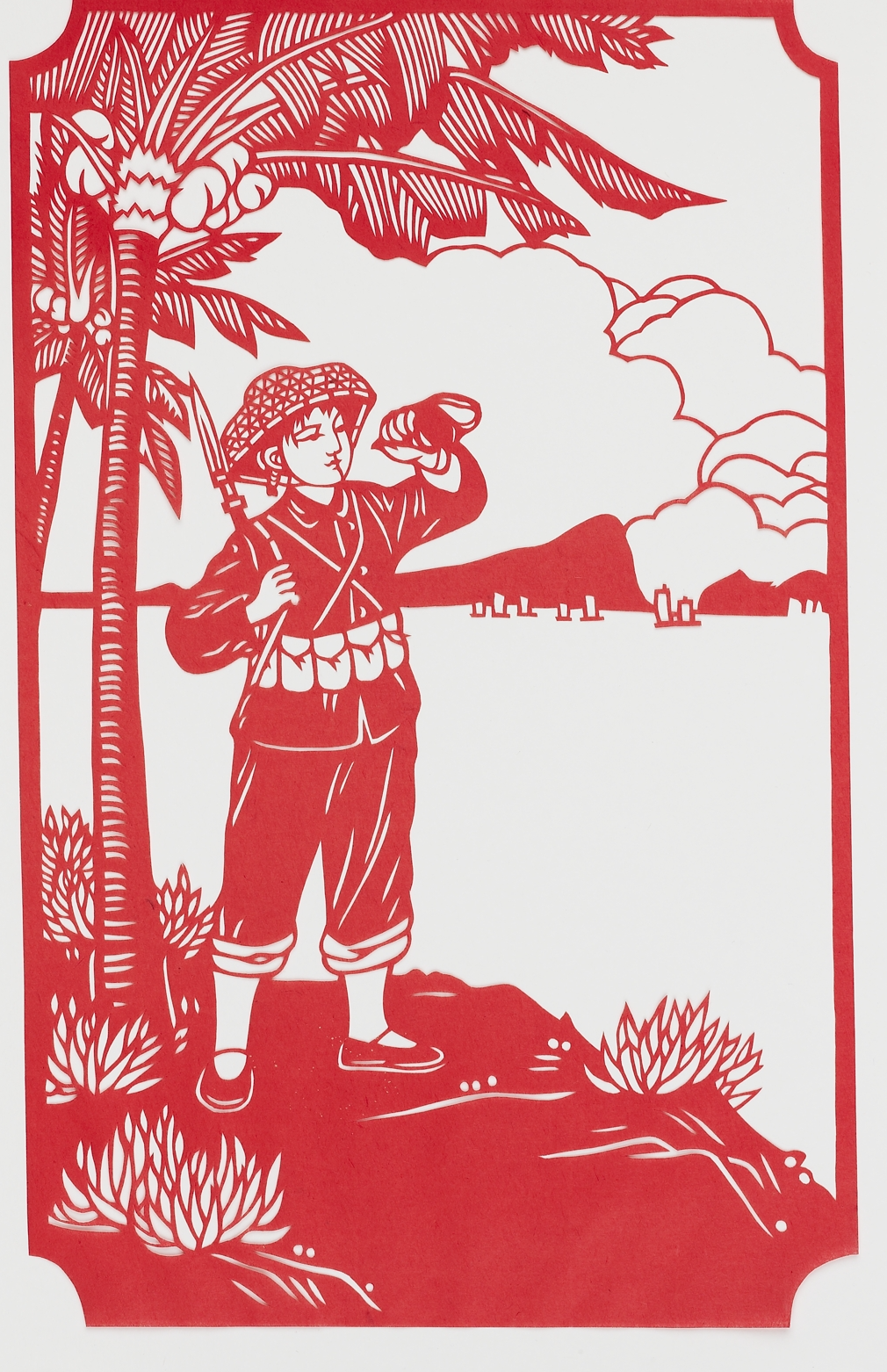
An Illustration of Island Militia Women, written by Li Ruqing (b. 1928) and first published in April 1966.
The story is set in the early 1960s on one of the China’s southeastern sea islands, where a group of female militia soldiers made a living by fishing but also armed themselves to defend their territory against enemies who ‘wanted to deconstruct the new China’.
place of creation: China 1973 - 1974
Presented by John Gittings, 2008.
cut paper, 23.5 x 14.5 cm (height x width)
These papercuts illustrate the Chinese Communist vision of gender equality during the Cultural Revolution era (1966-76). In the early twentieth century, the Communists, along with many nationalists, saw long-established practices (such as the denial of education to women and foot-binding), as damaging not only to women but also to the Chinese nation as a whole – undermining its ability to resist imperialism. In his youth, Mao Zedong was particularly concerned with women’s rights, opposing arranged marriages, and advocating divorce and sexual equality. His treatment of the women in his own life was, however, not exemplary, and when in power, the Communists often made compromises with prevalent patriarchal attitudes, while creating their own forms of gender inequality. Even so, the Cultural Revolution was an era when sexual equality was stressed, and Mao’s aphorism “Times have changed, Men and Women are the same. What men can do women can also do” was frequently quoted. These ideas were promoted through images of women working and fighting, and by ballets such as The Red Detachment of Women. At this time female Red Guards cut their hair short and wore military-style uniforms – though as we see in these papercuts female beauty is still emphasized. Communist visions of gender equality with women shown as workers and soldiers had considerable global appeal in the mid-twentieth century, especially in the decolonising world.